Tory Treasury Board critic Stephanie Kusie recently said she had high hopes the April 28 update would ‘finally outline progress made’ with the Liberals’ spending review, which aims to cut billions of dollars and thousands of jobs from the public service.

If you are the government offering this dosh, there is a better-than-average chance you might collect some new supporters or reinforce existing ones.

Some of the laws set for amendments by the new Liberal majority government are the Employment Insurance Act, Canada Transportation Act, and Red Tape Reduction Act.
The government’s deficit in 2025-26 was lower by $11.4-billion than anticipated in Budget 2025, partly because of better government revenues impacted by higher oil prices.
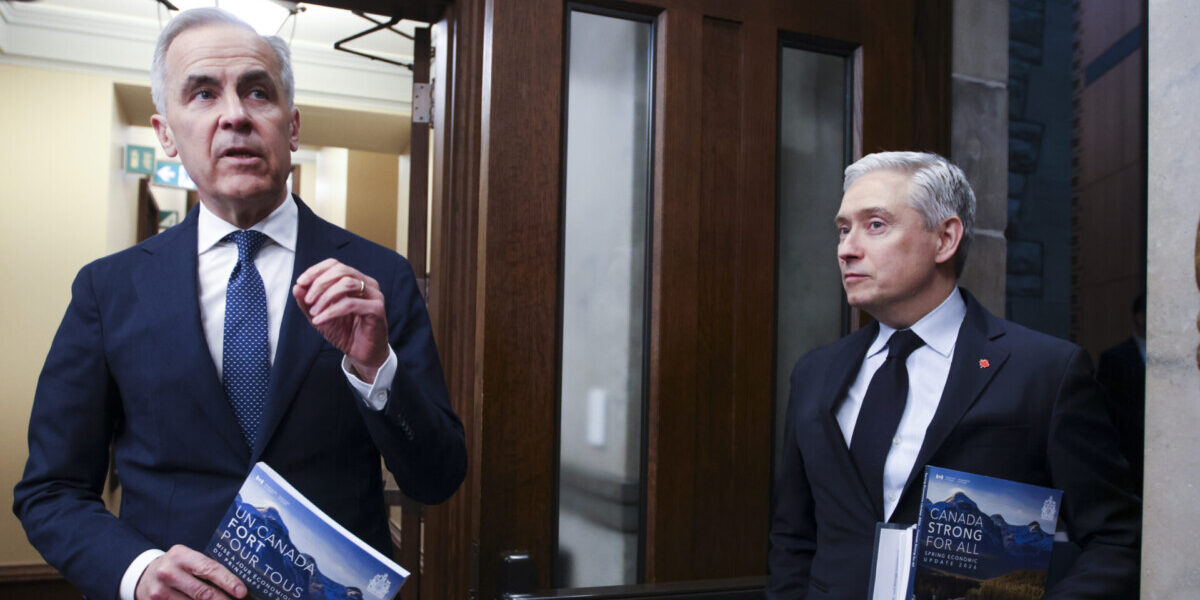
The 2025-26 deficit is down $11.4-billion compared to the 2025 budget’s forecast, but will reach nearly the same level projected for 2026-27, with an anticipated deficit of $65.3-billion.
The Canada Revenue Agency says it will expand the use of artificial intelligence in detecting fraud and ensuring compliance, but unions representing affected workers say job cuts will hinder efforts to go after tax cheats.
The current short-sighted arrangement of unpredictable funding cycles impedes the program’s ability to efficiently deliver results.

Canada’s participation in the U.S.-led operation has been under a microscope amid American airstrikes on alleged drug boats. Potential reductions for Operation Caribbe in the upcoming fiscal year could represent one fewer ship going to the region, says professor Adam Lajeunesse.

Reduced spending is attributed to the federal government’s spending review and expiring funding for the national strategy for rare disease drugs, Canadian Drugs and Substances Strategy, and for home care and mental health.

One of the creators of this year’s best-animated short film says he could ’not have made this film without’ the National Film Board of Canada, but its budget is projected to fall for the fifth consecutive year.

Before they can evaluate the new nominee, the Tories have ‘a lot of concerns’ about the process by which the government dealt with the interim parliamentary budget officer and the choice to leave the post vacant until a permanent appointment was named, says Conservative MP Stephanie Kusie.

The funding for the Enhanced Nature Legacy Program will sunset March 31, and there’s no word on its renewal. Meanwhile, the feds say a nature strategy is coming, but the 2026-27 main estimates highlight a 62 per cent drop in cash for nature conservation.

Conservative MP Stephanie Kusie says the PBO is ‘unable to do its job of providing government oversight.’ But another former budget watchdog Kevin Page says the prime minister has ‘deep respect for the legislative budget offices,’ adding that the next PBO will be faced with ‘enormous challenges’ in the months and years ahead and will be playing a critical role.

Prior to the 1980s, federal cabinet ministers made do with a handful of staff, but that has jumped to between 15 and 25 exempt staffers over the last 40 years, says professor Donald Savoie.

The $2.2-billion request for defence spending is ‘all tied’ to meeting NATO’s defence spending target, says Canadian Global Affairs Institute’s Craig Stone, but Macdonald-Laurier Institute’s Christopher Coates says it should be seen as ‘long overdue’ modernization of the Armed Forces.

Conservatives have concerns about a clause buried in Bill C-15 that grants cabinet ministers the power to exempt any individual or firm from nearly any federal law—excluding the Criminal Code—for up to six years.

The omnibus budget bill gives unprecedented power to federal ministers to exempt virtually any entity from all federal laws and regulations—except the Criminal Code.
Treasury Board Secretariat official Jenelle Power said the bill would not allow ministers to exempt people or businesses from law for ‘broad policy purposes,’ and there are ‘strict limitations’ to such legal exceptions, including time limits.
Ministers must be equipped to interrogate advice with the same skepticism, financial scrutiny, and risk discipline that any serious investor would demand before committing billions of dollars of capital.

With spending projections increasing while patients struggle to access care, it is well past time to tackle our health care problems.

Green Leader Elizabeth May says the prime minister’s ‘word means nothing,’ but isn’t closing the door on co-operating with the progressive opposition to advance the government’s ecological agenda.

The Canadian Association for Long Term Care says it will need an additional 382,400 to 454,000 beds by 2035 to keep up with demand. This is an increase of between 93 per cent and 121 per cent.

The Correctional Service and Fisheries and Oceans are among the five affected, but the Parliamentary Budget Office is now requesting information about how all departments will achieve the projected $60-billion in spending cuts by the end of the decade.
There’s no good reason the federal government cannot—like publicly traded companies are required to—publish its financial statements in three months.
When our government rewrites truth-in-advertising rules, it not only impairs consumer choice and dupes investors, but it also rigs the market to favour big polluters over genuinely green industries.