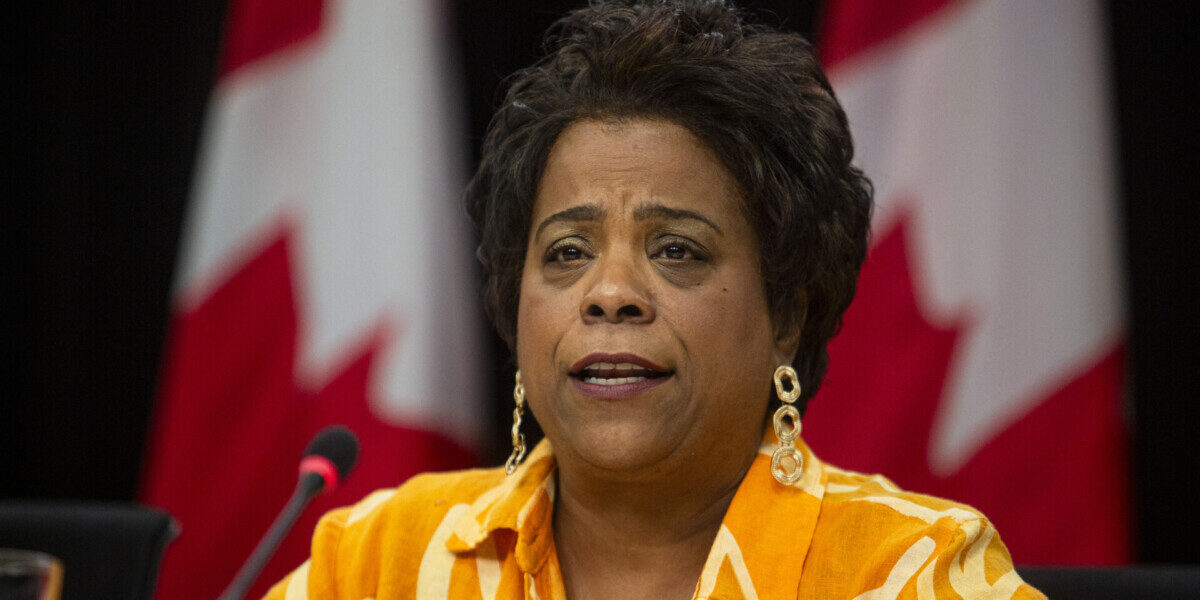
Health Minister Marjorie Michel’s office says it is ‘committed to preventing vaping,’ but does not promise to ban flavours.
‘Where is R&D flourishing right now? It’s not in the U.S. It’s not in Europe. It’s in China,’ says IMC’s Bettina Hamelin at Canada’s Drug Agency’s annual symposium.
The non-binding policy proposals come in the wake of a new Alberta law allowing physicians to work in both the private and public systems. The law will ‘fundamentally change the structure of Canada’s health system and not just tweak the delivery of it,’ says Canadian Doctors for Medicare’s Dr. Bernard Ho.
A joint parliamentary committee is studying recommendations for the eligibility of medical assistance in dying for those whose sole condition is mental illness. It’s currently set for implementation in 2027, following two delays in the last three years.
The national and Quebec groups representing obstetricians and gynaecologists say a bill naming coerced sterilization in the Criminal Code could lead to physicians hesitating to provide critical care during emergencies for fear of prosecution. But Senator Yvonne Boyer, the bill’s sponsor, and Justice Department officials say doctors have legal protections in these situations.
The department recently told recipients it would cut 2.26 per cent of the total funding first agreed upon in 2024. Baldinelli says these groups are being held accountable for their work to receive this money, yet Ottawa can just backtrack from the contractual deals.
Reduced spending described in the 2026-27 departmental plan is attributed to the scaling back of COVID-19-related measures and the potential expiry of programs including the national suicide crisis helpline and the Canadian Drugs and Substances Strategy.
Reduced spending is attributed to the federal government’s spending review and expiring funding for the national strategy for rare disease drugs, Canadian Drugs and Substances Strategy, and for home care and mental health.
The reduction is a part of the federal government’s spending review, and impacts 17 organizations. BioCanRX president Dr. Stéphanie Michaud says the cut is ‘inconsistent’ with the government’s messaging on the importance of funding science.
Marcus Powlowski, who is also a doctor, visited children’s hospitals in Canada to get input on his bill that aims to give clinicians more say on a federal program that provides access to medicines that are not approved here. Those doctors are ‘frustrated by government bureaucracy that’s preventing them from delivering the optimal treatment to kids,’ Powlowski says.
Witnesses told MPs that global conflicts and new U.S. policies should motivate the federal government to improve its regulatory processes to ensure that companies want to produce their pharmaceuticals in Canada.
But pollster Nik Nanos also says he thinks Iran is ‘the new wildcard’ in public opinion. He will be looking to see if it has changed Canadians’ perceptions of Prime Minister Mark Carney or if it’s led to more concerns about U.S. President Donald Trump’s actions.
U.S. President Donald Trump is pushing the sector to negotiate for drug prices similar to those in Canada, which could impact whether companies choose to list their medicines here.
Joss Reimer says she wants to tackle misinformation and disinformation, and place more emphasis on the social determinants of health and preventative health. She’s also keeping a close eye on H5N1, also referred to as the bird flu, to ensure that Canada has an influenza pandemic plan in place.
After her two daughters’ health issues were nearly misdiagnosed, Sen. Danièle Henkel decided to focus on women’s health in the Upper Chamber. The result is Bill S-243, the National Framework for Women’s Health in Canada Act, which is now at second reading in the Senate.
The previous Liberal government told provinces and territories early last year that they would have to cover medically necessary services by non-physicians and gave them 14 months to prepare. Health Minister Marjorie Michel’s office has confirmed it will move forward.