

David Crane
David Crane is an award-winning journalist with special interests in the economics of globalization, innovation, sustainable development and social equity.

David Crane is an award-winning journalist with special interests in the economics of globalization, innovation, sustainable development and social equity.
It is only with the enmity of the American administration that we are now seriously embracing new thinking and pursuing new priorities. We are still very much a work in progress. But there is a reasonable chance we are heading in the right direction. Short-term pain for long-term gain.

We need a strong determination to build and support Canadian entrepreneurs and projects in pursuit of digital sovereignty, including support for quantum computing and application projects for AI.

Canadians face tough months ahead. But Trump’s political weakness should encourage our own resolve to hang tough. The last thing Americans want is an unneeded trade war with their next-door neighbour when their own house is burning.
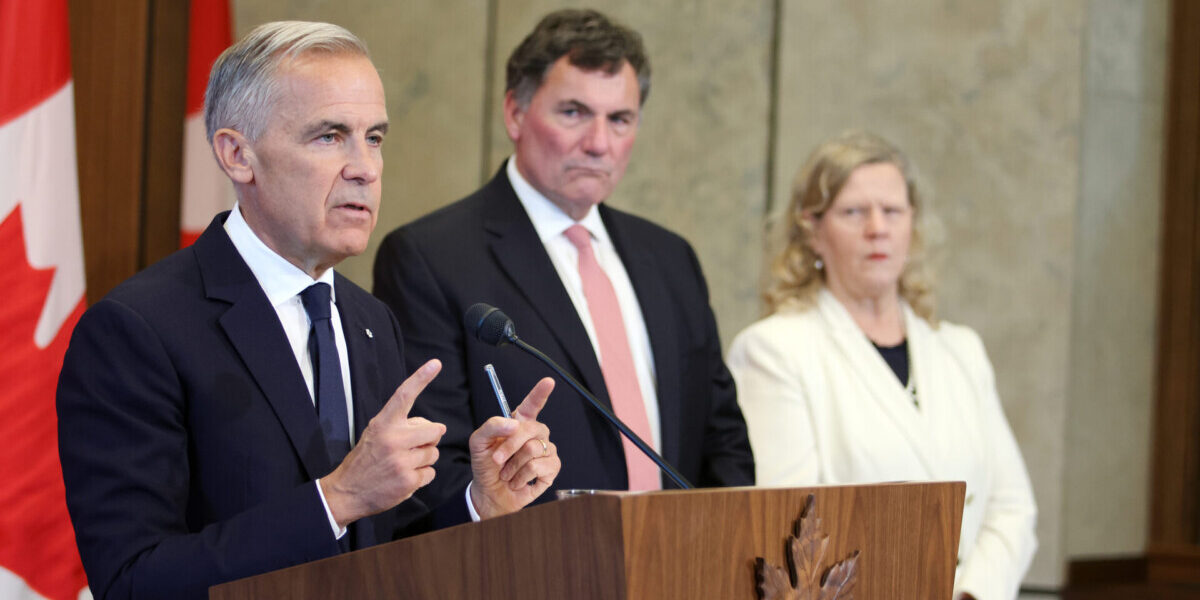
As Canada walks away from trade negotiations with the United States, what we need now is a state-of-the-nation address by Prime Minister Mark Carney, spelling out where we go from here, the strategy for a new Canada, and how it will be implemented.

We are spending on our science base, which consists of our universities and colleges and government support for companies. But we are not capturing the value. Spending more on science won’t deliver better results unless we fix the other barriers to growth, as well.

U.S. President Donald Trump and his cronies may hate us, threaten us, mock us, and try their hardest to hurt us. But we don’t have to kowtow. We have alternatives and that’s where we should spend our energy. We don’t have to be a vassal and shouldn’t want to be.
Ultimately, Mark Carney’s ambitions for Canada as a prosperous and sovereign nation depend—more than anything else—on our success in using talent and entrepreneurship to make us an innovation nation.

To help transform Canada Post as a key vehicle to promote a Canadian digital economy, Ottawa could enlist a small group of savvy Canadian digital entrepreneurs to identify opportunities and help propose a restructured corporate organization.

The time has clearly come to examine the role Canada Post could play in advancing this country’s AI ambitions and the broader strengthening of digital sovereignty.

Wood Mackenzie identified 35 possible projects, leading the Alberta submission to state that there was ‘planned and potential’ production, concluding that, ‘deliverable crude supply will be ample to justify the capacity of the project.’ But potential isn’t the same as commitment.

Our business executives can’t extol the benefits of market economies and then shy away from the huge challenges—and opportunities—facing the country. If we are to achieve the economic transformation we need, they must do more.

Routledge says our banks are not thinking of a new business model for a new kind of economy. That’s a big problem that could cost Canada dearly. To build this new economy, we need a new kind of financial system and it has to be a national priority if we are to be a prosperous and sovereign nation.

It’s through innovation that we can build a more productive economy. With a more productive economy, we can generate higher incomes and, as a country, afford to do things we cannot afford to do today.

Canadians are vulnerable to U.S. laws, even if their data is stored in Canada on a U.S.-tech giant system. Stored in Canada doesn’t mean safe in Canada if it’s in a U.S.-owned facility.

Canada has a long history of great aspirations with a long record of high hopes, but followed by a sorry record of little real accomplishment. This time has to be different.

Canadians who could help Canada become stronger and more prosperous are helping the U.S. when they join U.S. big tech instead.