

‘Where is R&D flourishing right now? It’s not in the U.S. It’s not in Europe. It’s in China,’ says IMC’s Bettina Hamelin at Canada’s Drug Agency’s annual symposium.

While global progress continues, Canadian patients often find themselves waiting as others benefit from therapies that could transform their lives.

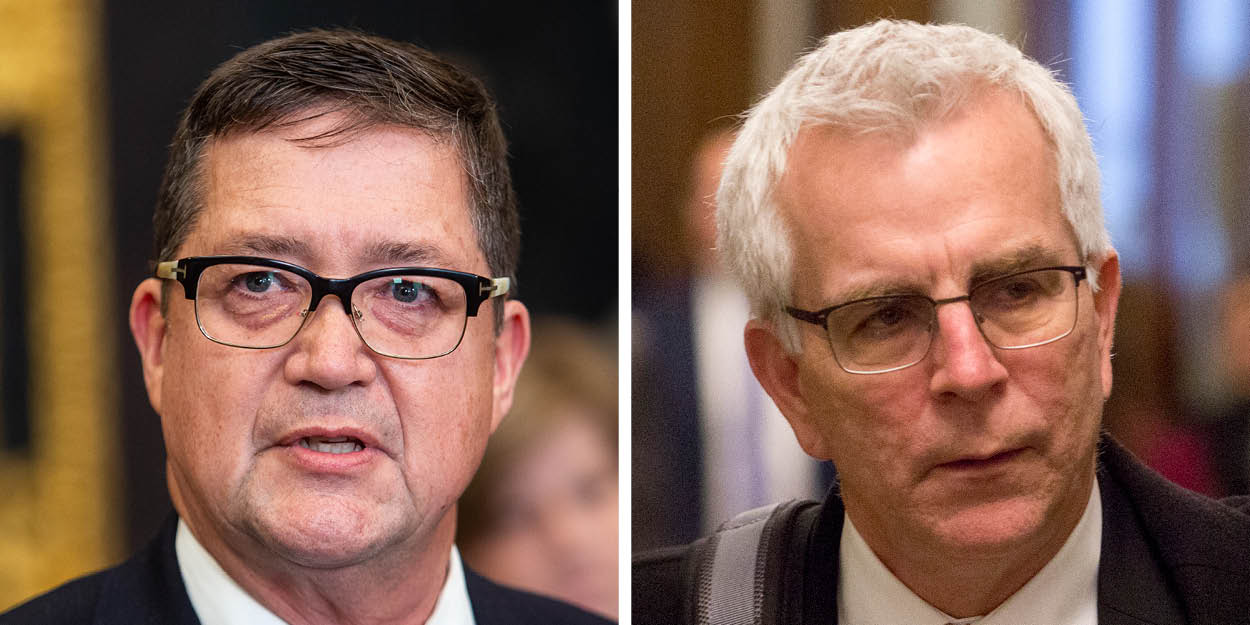
The department recently told recipients it would cut 2.26 per cent of the total funding first agreed upon in 2024. Baldinelli says these groups are being held accountable for their work to receive this money, yet Ottawa can just backtrack from the contractual deals.

Reduced spending is attributed to the federal government’s spending review and expiring funding for the national strategy for rare disease drugs, Canadian Drugs and Substances Strategy, and for home care and mental health.

The reduction is a part of the federal government’s spending review, and impacts 17 organizations. BioCanRX president Dr. Stéphanie Michaud says the cut is ‘inconsistent’ with the government’s messaging on the importance of funding science.

Witnesses told MPs that global conflicts and new U.S. policies should motivate the federal government to improve its regulatory processes to ensure that companies want to produce their pharmaceuticals in Canada.

Marcus Powlowski, who is also a doctor, visited children’s hospitals in Canada to get input on his bill that aims to give clinicians more say on a federal program that provides access to medicines that are not approved here. Those doctors are ‘frustrated by government bureaucracy that’s preventing them from delivering the optimal treatment to kids,’ Powlowski says.

By embedding children’s needs more explicitly within regulatory decision-making, we can ensure that medicines proven safe and effective in comparable jurisdictions can reach Canada’s kids faster.

U.S. President Donald Trump is pushing the sector to negotiate for drug prices similar to those in Canada, which could impact whether companies choose to list their medicines here.

When care models are designed around patient needs and unique local realities they can expand access, protect system capacity, and deliver better outcomes.

Changing our own drug system to better encourage investment and innovation is not an easy task, but it’s a necessary one.

The federal Biomanufacturing and Life Sciences Strategy, released in 2021, did not result in needed policy changes or alignment of federal departments and investments. In contrast, other top-tier countries place life sciences at the centre of industrial strategies and align the sector with talent, trade, research and development, innovation and infrastructure.

Seven provinces and two territories don’t yet have deals even though Prime Minister Mark Carney said last fall that his government is committed to signing more agreements.

Only British Columbia, Manitoba, Prince Edward Island, and the Yukon have reached pharmacare deals with the federal government, covering contraception and diabetes medications.

The agency’s 2024-25 departmental results report uses rates from a 2021 survey. Newer data is available, but that source doesn’t include rates from all provinces and territories.

But that doesn’t mean the drug pricing tribunal can’t look at past years’ data to inform future reviews of drug prices, says director general Guillaume Couillard.

Interim NDP leader Don Davies says the feds must continue negotiating deals with provinces and territories under the pharmacare law passed last year.

Our innovation system remains fragmented. Partnerships between universities, industry and government are often too ad hoc, funding cycles are short, and incentives are often misaligned.

The House Health Committee is looking into the links between immigration and health human resources shortages. But Liberal MP Mark Powlowski says the Conservatives’ language on this ‘ticks’ him off as it suggests the problem in health care is a result of too many immigrants, which ‘is clearly wrong.’
MPs have been on the Hill for less than three months this year thanks to prorogation this past winter and the spring election campaign, making lobbying a challenge in 2025.

Health Minister Marjorie Michel said something could happen with pan-Canadian licensure for doctors in 2026 but the organization responsible for this work isn’t making any promises.
A strong government instills confidence in the country’s people and its businesses. This government’s waffling on pharmacare does none of that.

Amid the Liberals’ focus on building a stronger economy, Health Minister Marjorie Michel’s office says that faster access to new medicines and supporting researchers are priorities.

A proactive and co-ordinated strategy from the government is essential to safeguard both access and affordability to medicines for the long term.

As an emergency room doctor, I watch seniors decide between groceries and blood pressure pills; I see new immigrants ration insulin. In a country as wealthy and compassionate as Canada claims to be, this is cruel.
