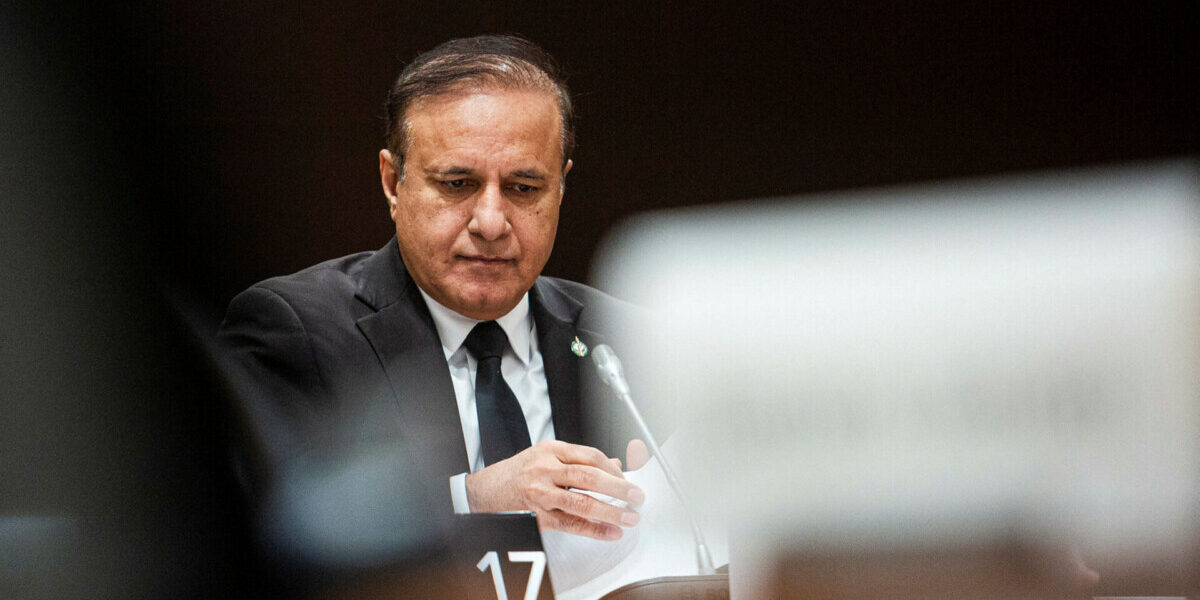
As Ottawa shrinks the public service to rein in operating spending, Shafqat Ali declines to estimate how many involuntary departures may still be needed, while PSAC urges a reassessment of the cuts.

The feds want the new organization to expand AI, rebuild in-house expertise, and help Canadian tech firms grow, raising questions about whether those goals can coexist without deepening dependence on outside suppliers.

Launched on Sept. 15, the dashboard shows trends by department or by employment tenure over time. Parliamentary Budget Officer Annette Ryan calls it ‘one piece of the puzzle,’ with other data published by the Treasury Board Secretariat.

New federal data show early-retirement applications nearing the scale of planned workforce reductions in some departments, but former senior officials say the effect on layoffs will depend on which jobs are vacated, and whether they need to be refilled.

When it comes to sharing data—even with appointed outsiders—do not expect a two-way, out-in-the-open exchange.

‘You’re going to get situations where you will lose some good performers who you would not normally want to lose,’ says David McLaughlin, executive director of the Task Force for Modernizing Government.
Among Public Service Alliance of Canada members who have received notice their jobs are at risk and who disclosed their gender, the vast majority are women. Treasury Board has not released its own gender breakdown of workers receiving affected notices.

First published in March 2025, Public Service Commission guidance explicitly allows artificial intelligence to help determine which candidates advance in the federal hiring process, but experts and unions question whether there are sufficient safeguards around bias, human oversight, and transparency.

More than 10,000 employees applied, but Treasury Board cannot quantify how much the incentive, or voluntary departures overall, will reduce involuntary exits.

‘It’s just another tragedy in the access story,’ says historian Timothy Sayle of the decision to axe the three-year-old program, and part of a ‘broader pattern of underfunding access to information and preventing Canadians from studying Canada’s history.’

The ‘inflow’ of new civil-servant hires slowed to 28,564 compared to 40,790 in 2024-25, while 11,230 federal staff got a job boost last year, down from 23,000, according to new data from the Public Service Commission.
National Defence says its Carling Campus has approximately 10,000 employees but just about 5,000 parking spaces, while ESDC says some office locations will need additional workspaces. Environment and Climate Change Canada is expecting a phased approach at several offices.
Public servants are expected to justify laws, policies, and programs with rigorous analysis and clear value for money. Yet for this sweeping change to their own working conditions, the government has produced no cost-benefit analysis or productivity data.

‘As a central agency with the essential role of supporting the prime Minister and cabinet … PCO ought to demonstrate a clear and sustained commitment to transparency,’ says Information Commissioner Caroline Maynard in her recent annual report.

Veteran investigative journalist Dean Beeby says the Liberals’ proposed changes, including shielding emails and texts from access-to-information requests, is ‘regressive’ and ‘should be scrapped.’

The future may be a manipulative, systematically dysfunctional access-to-information system like that of the Department of National Defence.
Government has a ‘management culture’ problem. In recent years, process has become more important than results, and excessive oversight encourages risk aversion rather than the entrepreneurship we need.

The Parliamentary Budget Officer projects the government’s cost for federal public service insurance plans will reach $4.4-billion in 2030-31. The report came after the Senate’s National Finance Committee asked the budget watchdog to analyze these costs.

If approved by Parliament, voted budgetary spending would increase by 4.8 per cent from the 2026–27 Main Estimates, to a total of $241.6-billion in government spending.

Former Privy Council clerk Michael Wernick says awarding a bonus involves ‘a fairly sophisticated conversation’ that considers how they achieved key targets. ‘Did you leave a trail of bodies behind you … or did you strengthen your team?’

Its software replacement will fail again if the government doesn’t address the root causes: lack of flexibility and connectivity with existing systems.

Overall hiring has decreased by 32 per cent and promotions by 18 per cent compared to the year before. This analysis aims to provide an initial assessment of cuts on employment equity and whether the data substantiates concerns raised by unions and advocates.
‘The fact that careful and deliberate steps have not been taken to ensure that employment equity groups are not disproportionately harmed by these historic austerity measures tells us everything we need to know about our employer,’ says union leader Nathan Prier.

With thousands of jobs cut entirely from the public service and thousands more retiring early, ‘that could put operations, in some places, at risk,’ warns union leader Pamela Isfeld, noting the early retirement program has already seen significant interest.
The Canada Revenue Agency says it will expand the use of artificial intelligence in detecting fraud and ensuring compliance, but unions representing affected workers say job cuts will hinder efforts to go after tax cheats.