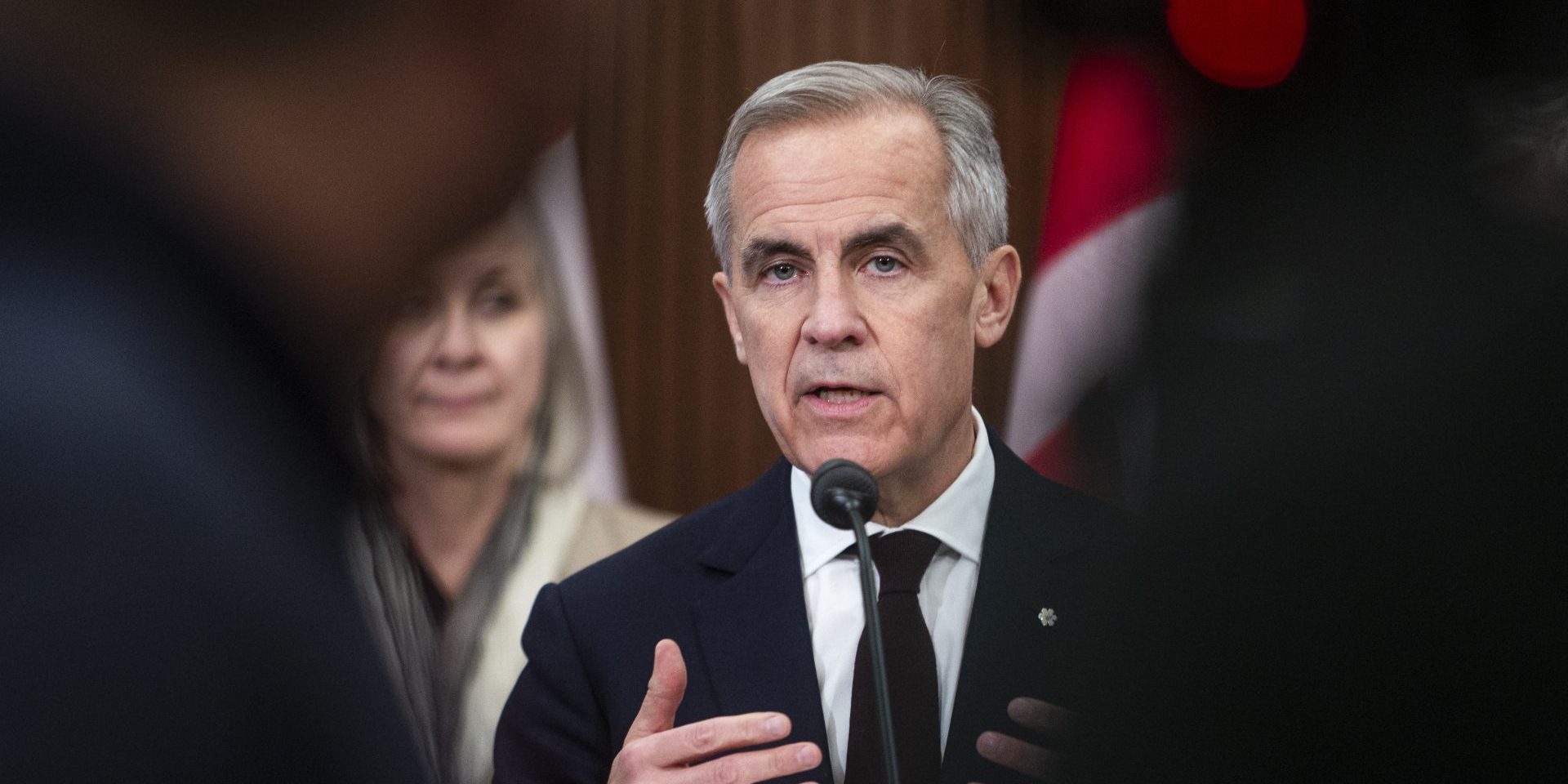
Prime Minister Mark Carney has suggested that the new world order will be built out of Europe, but analysts have their doubts.

Will we simply hope that our raw materials will sustain our prosperity? Or do we need to become aggressively proactive in building a new knowledge-based economy? The latter will take much greater effort than has been deployed so far.

Any American commitment to defend Taiwan from China’s aggression died years ago when Russia began its invasion of Ukraine and the U.S. did not come to its defence. But that doesn’t mean the island is doomed.

The greatest threat to auto workers is the active U.S. trade war shuttering plants, not hypothetical Chinese competition.

When market access becomes uncertain, Canada’s strategic advantage weakens regardless of production strength.

A 2023 House motion called for Canada to accept 10,000 Uyghur refugees by the end of 2026. But a senior departmental official told the House Immigration Committee last month that fewer than 300 people have arrived in Canada.
Canada needs a foreign policy approach that seeks to advance our values without falling into the trap of self-righteous ineffectiveness.

We need to move our economic ties to China beyond traditional exports to the knowledge-based industries of the future. Understanding the latest five-year plan is a good place to start.

Insisting students of minority groups be taught entirely in Chinese to the neglect of their native language suggests a desire to demote these languages and ultimately to eliminate them completely.

For Canadians, this latest lesson in the saga is a confirmation that the U.S. president has no limits, and is capable of anything.

This is only the beginning of a long and challenging journey for a new Canada. Success will take much more work.

In a region that is increasingly defined by uncertainty and rivalry, Canada needs clarity on who its true strategic partners are. That doesn’t mean disengaging from China, but it must be tactical.

Foreign Affairs Minister Anita Anand has signalled that Canada is reworking its Indo-Pacific strategy after thawing relations with China and India, but another major player in the region isn’t forecasting big changes.

Effective diversification must rest on rigorous ongoing analysis of the global economy and Canada’s role within it.

Since the launch of the Indo-Pacific Strategy in late 2022, Canadian warships have sailed through the Taiwan Strait seven times.

All six members of China’s highest military body have been dismissed on suspicion of corruption, including last month the vice-chair, Zhang Youxia, one of President Xi Jinping’s oldest friends. It’s a stunning reshuffle of the senior ranks.

The two countries should make the list of areas where we co-operate longer, make the list of irritants shorter, and keep reinforcing the bond of common interests so as to build strong partnerships.
More than 3,100 employees at Global Affairs Canada have received notices that their jobs could be affected by cuts at a time when the prime minister is signalling a new approach for the country’s foreign policy.

More than a third (33.9 per cent) of all federal advocacy in 2025 was about economic development, setting a new record in annual lobbying.

The Conservatives complaining about the PM going to China for a trade deal are the same people who are begging for a new pipeline out to the coast of B.C. to sell oil to China.
Although Prime Minister Mark Carney is seen as embarking on a more ‘pragmatic’ and ‘interests-based’ foreign policy, Ottawa-based foreign diplomats are wary about the potential for misplaced trust in the Asian superpower.

After Prime Minister Mark Carney inked a new trading arrangement with China during his state visit last week, stakeholders are advising against revisiting the government’s 5G ban on Huawei.

The long-term outcome of Mark Carney’s trade mission is unclear. What is clear is that the two countries have been working hard to repair the relationship.

The question in foreign affairs is not if diplomatic risk exists, but how it is managed. As the government balances that reality, the Conservative response appears rooted to domestic constituencies rather than moored in a coherent vision of Canada’s place in a fragmented global economy.

The Liberal government published the draft regulations for the long-awaited foreign agent registry nearly 18 months after royal assent, but opposition parties say they have yet to be consulted on a potential commissioner.