Proposed reforms to pesticide regulations place immediate economic considerations above health costs that are harder to measure in quarterly budgets, but are very real in people’s lives.

Expanding plant-based agriculture offers an opportunity to grow the economy, strengthen resilience, enhance food security and food sovereignty, and address climate change simultaneously.

Agriculture is one of Canada’s most innovative sectors. Our national AI policy should reflect that.
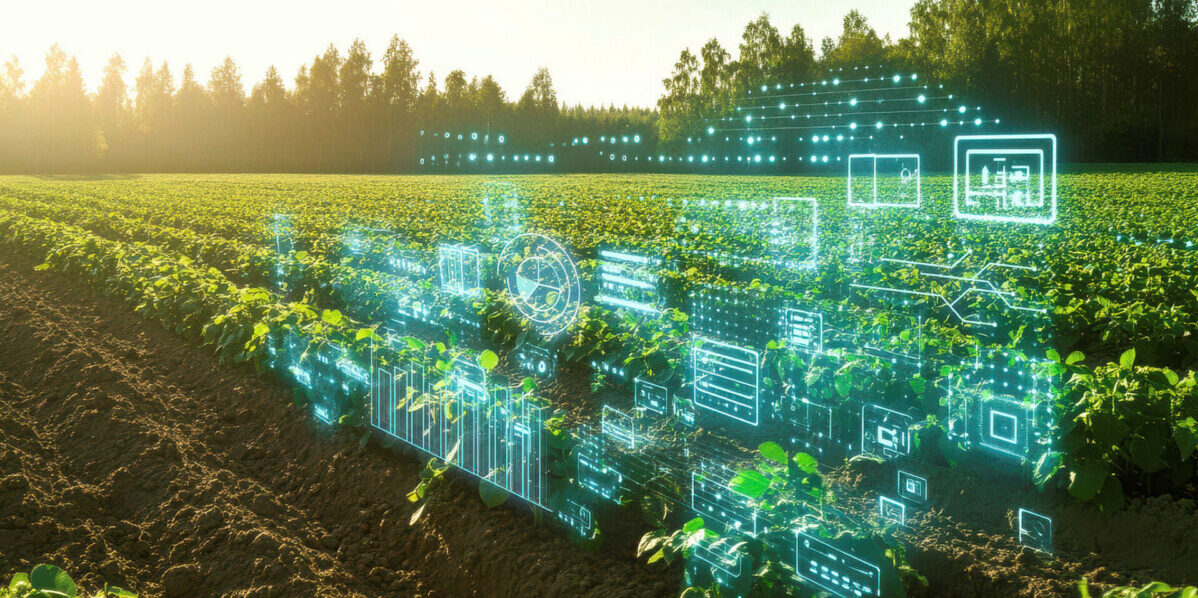
If Canada wants to lead in AI, on our own terms, with our own data, and for our own people, we should be leaning into where it already works: in the fields, barns, and processing plants that feed the country.

As non-tariff barriers continue to rise, the case for practical, business-friendly traceability upgrades becomes even stronger.

By expanding plant-based production alongside smaller-scale, higher-welfare animal agriculture, Canada can strengthen farm incomes, meet consumer expectations, reduce the pressures of concentrated systems. Diversified operations are often more stable and more connected to local communities.

Canada is well-placed to conquer our agri-food innovation problems; through a strong innovation culture with proven ventures that are ready to scale, a globally respected agriculture and food sector, and a desire to diversify our trade partners.

We are a long way from the worst. Humanity still has a chance to reduce our risks to those to which we can adapt. Still, British Columbia has had staggering losses.

Canada can be an agri-food leader, but to compete globally, producers and industry need access to the latest tools and technology.

Food security is not simply about supply. It requires adaptability. And adaptability is rooted in ingenuity, advanced through science and translated into practical solutions through research.

The goal is clear: ensure that Canadian producers and processors are equipped to face emerging risks while capturing new opportunities.

Changing the Income Tax Act in this way is a win for government, a win for rural communities, and a win for farming families.

Innovation is in Canadian agriculture’s DNA. Our farmers, ranchers, and processors have embraced new varieties, new technologies, and smarter stewardship practices, all while feeding Canadians and millions more people around the world.

The public opinion in this area is clear: Canadians see agriculture and food production as central to our economic future. They want stronger domestic supply chains.

Supply management is not a loophole. It is not a handout. It is a deliberate public policy choice that has kept family farms viable, food local, and rural communities strong for more than 50 years.

‘There’s never been a more important time to ensure that our domestic production is robust and protected,’ says David Wiens, president of the Dairy Farmers of Canada.
Farming is certainly not without its challenges; however, research, innovation, science and technology create tangible tools and resources that will help farmers and producers overcome some of the challenges facing the industry.

To grow exports, Canada’s agricultural research capacity must be maintained.

Agriculture and Agri-food Canada recently announced it’s closing several research centres that did work that farmers relied on, from developing new crop varieties, supporting pest management, and experimenting with new varieties of seeds.

Just because the tariff has been reduced today, ‘doesn’t mean it’s not going to come back,’ said Conservative MP Dan Mazier, whose Manitoba riding of Riding Mountain grows the most canola in Canada.

More than a third (33.9 per cent) of all federal advocacy in 2025 was about economic development, setting a new record in annual lobbying.

Approximately 8,500 public servants were notified this week that they may be impacted by potential job cuts, and more than 17,000 such notifications have gone out since December, public sector unions have confirmed.

The Conservatives complaining about the PM going to China for a trade deal are the same people who are begging for a new pipeline out to the coast of B.C. to sell oil to China.

The 2022 Indo-Pacific Strategy is a relic of an era where Canada blindly outsourced its foreign policy to Washington, D.C. That era is over.
‘We want to know what’s on our plate, we want to know what we’re buying,’ says agricultural critic Yves Perron about the petition he recently tabled calling for labels.