

With Maduro’s capture, be careful what you celebrate

For those inclined to rejoice at the fall of Nicolás Maduro’s regime and the display of American military muscle in Venezuela, caution is warranted. What may appear, at first glance, as a decisive blow against a brutal and corrupt government carries consequences that extend far beyond Caracas, and far beyond the immediate satisfaction of seeing an authoritarian ruler displaced.
Article 2(4) of the United Nations Charter is unambiguous. All members “shall refrain in their international relations from the threat or use of force against the territorial integrity or political independence of any state.” The International Court of Justice, in Democratic Republic of Congo v. Uganda, described this provision as the cornerstone of the UN Charter. It is not a technicality or a diplomatic nicety; it is the foundation upon which the post–Second World War international legal order rests.
Unilateral military action by one state against another—whether justified by historical grievance, border dispute, or even well-motivated compassion for populations suffering under brutal regimes—fundamentally undermines that order. Imperfect as it is, the system built around the UN Charter has largely preserved global peace for eight decades. To discard its central restraint is to invite a return to a world where power alone determines legitimacy. Such action deserves condemnation.
This is not an argument that the international legal order is flawless or beyond reform. It plainly is not. The answer, however, is not invasion on the basis of bogus, trumped up (pun intended) claims of a narco state, followed by the installation of a compliant puppet government. Those precedents are precisely what Russia’s Vladimir Putin dreams of as he eyes Ukraine and the Baltic states. In other parts of the world other leaders may hold similar ambitions.
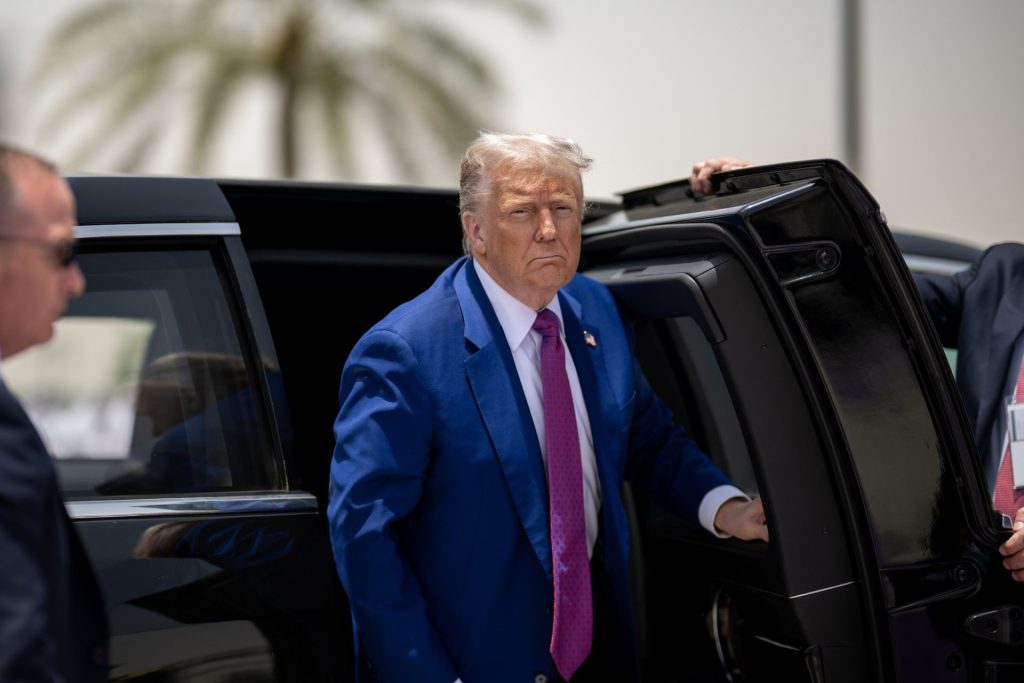
The consequences are both immediate and long term. Across South America, every state—whether democratically elected or not—has just received a massive infusion of anti-American sentiment. The memory of gunboat diplomacy was never far below the surface; it has now been sharply refreshed.
Within NATO, unease deepens. Alliance members look toward Greenland and contemplate—however uncomfortably—the prospect of a United States incursion into the sovereign territory of Denmark, a NATO member, by another NATO member. Article 5, already strained by shifting political commitments and strategic ambiguity, is further hollowed out. Vladimir Putin, meanwhile, has every reason to rejoice. The message appears to be simple: might makes right.
Get Weekend Point of View Newsletter
A round up of the past week’s opinion writers and columnists on Saturdays and Sundays.
By entering your email address you consent to receive email from The Hill Times containing news, analysis, updates and offers. You may unsubscribe at any time. See our privacy policy
Greenland, while culturally European, is geographically North American. The old U.S. Monroe Doctrine, along with manifest destiny, provides a patina of plausibility for expansionist ambitions. If gunboat diplomacy works so effectively in the southern hemisphere, why not try it in the north? The narco-terrorist distraction may not translate as easily, but for a leader inclined to transactional reasoning, grabbing Greenland’s resources without lawful excuse becomes a matter of semantics rather than principle.
Canada, meanwhile, looks north with renewed anxiety. Long dormant disputes over sovereignty in the Arctic archipelago—some frozen by time, diplomacy, and restraint—now demand urgency. The signal has been sent: any state with sufficient military capability (especially one armed with nuclear weapons) may take what it wants, when it wants, with or without plausible legal justification. Memo to Prime Minister Mark Carney: whatever is our state of military preparedness, it must be accelerated exponentially.
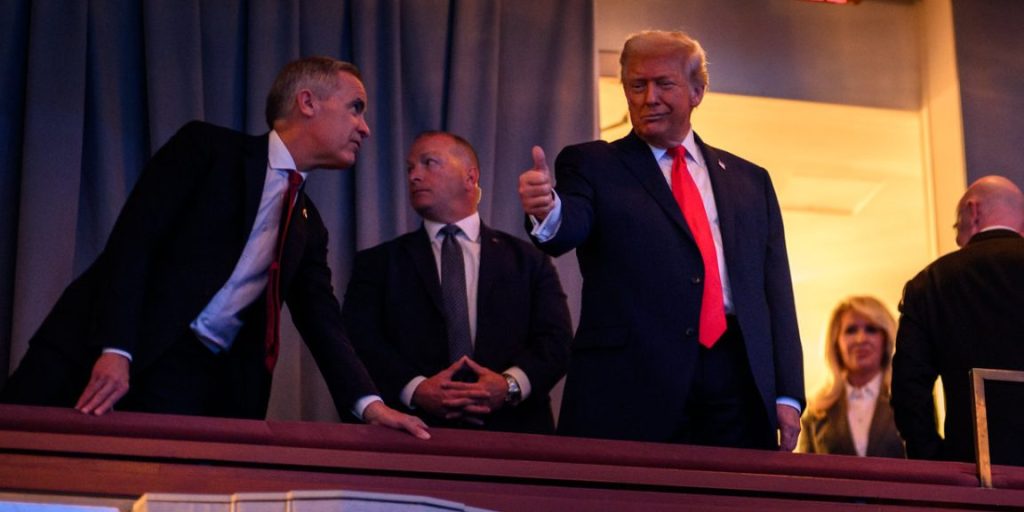
To be clear, the United Nations and the broader international legal order, grounded in the principle of state sovereignty, have long been imperfect, often painfully so. They have, at times, been blind or indifferent to the suffering of populations trapped under brutal, self-serving regimes. Mechanisms do exist to address such abuses: international criminal courts, sanctions regimes, diplomatic isolation. Too often these tools fail to produce meaningful internal change or deliver justice to those most affected.
That failure is a legitimate subject for reform, and reform is necessary. But unilateral military action against a sovereign state is not the solution. It erodes the very legal and normative restraints that, once discarded, leave no principled barrier to aggression by anyone, anywhere.
Be careful what you celebrate. Reform is essential. Invasion is not the answer.
Marcus Polowski is a Liberal MP, representing Thunder Bay–Rainy River, Ont. John McKay is a former Liberal MP, who represented Scarborough–Guildwood, Ont., from 2004 to 2025, and Scarborough East, Ont., from 1997 to 2004. He has also served as the chair of the Canada–U.S. Parliamentary Group.
The Hill Times


