

The feds want the new organization to expand AI, rebuild in-house expertise, and help Canadian tech firms grow, raising questions about whether those goals can coexist without deepening dependence on outside suppliers.

Canadians see merit in investing in pipelines, ports, and highways. But the day also calls for investments in the digital economy.

Machinery-of-government changes can create the appearance of reform while leaving the rules, contracts, incentives and leadership of the old institutions intact, and the result is a new organization that behaves exactly like its predecessors.

Voluntary principles, as outlined in the government’s national framework for AI, have no legally binding force. They typically lack efficacy and transparency, even as governments and tech companies often prefer voluntary arrangements to binding regulation.

We need a strong determination to build and support Canadian entrepreneurs and projects in pursuit of digital sovereignty, including support for quantum computing and application projects for AI.
The rookie MP has launched the Cellular Connectivity Project, a crowd-sourced initiative designed to identify cellular dead zones and build a more reliable coverage map.

The federal government has begun building guardrails for AI, but a safeguard that is never tested or audited risks becoming a good intention rather than a meaningful protection.

A tariff cannot be stopped by better data, but the ability to securely connect and use reliable and timely information will help Team Canada identify vulnerabilities faster, redirect supply chains, support workers, and find new markets before the next shock becomes a crisis.

Political announcements establish ambition. Engineering milestones determine whether that ambition becomes infrastructure.

Ottawa’s decision to pull out of bilateral trade negotiations with the U.S. has demonstrated that Prime Minister Mark Carney has drawn a ‘red line’ around the cultural industry, according to one industry player.

The Canada Revenue Agency spent $4,900 on the four pilots, with experiments including generative AI in workforce adjustment, labour relations, and performance management.

Canada cannot recruit its way out of the primary-care crisis while clinicians continue losing capacity to fragmented technology and administrative work.

This country does not need another conference discussing innovation. It needs a measurable commercialization process that turns public investment into Canadian economic outcomes.

The ultimate lesson is that age verification is an insufficient policy response on its own. Canada needs to rethink how we approach addressing online harms—not simply with launching a flat social media ban, but by building the infrastructure needed to design and regulate safe spaces for youth online.

We are spending on our science base, which consists of our universities and colleges and government support for companies. But we are not capturing the value. Spending more on science won’t deliver better results unless we fix the other barriers to growth, as well.

The federal government’s current public consultation on AI transparency is a welcome continuation of what must become a broader national conversation, not only about how AI should be governed, but also what Canadians want it to help accomplish.

As federal officials assess proposals to optimize the Clean Economy Investment Tax Credits, the objective should be clear: align policy with reality, unlock investment that is ready to move, and leverage Canadian competitive advantages to build a strong, sustainable economy for everyone.
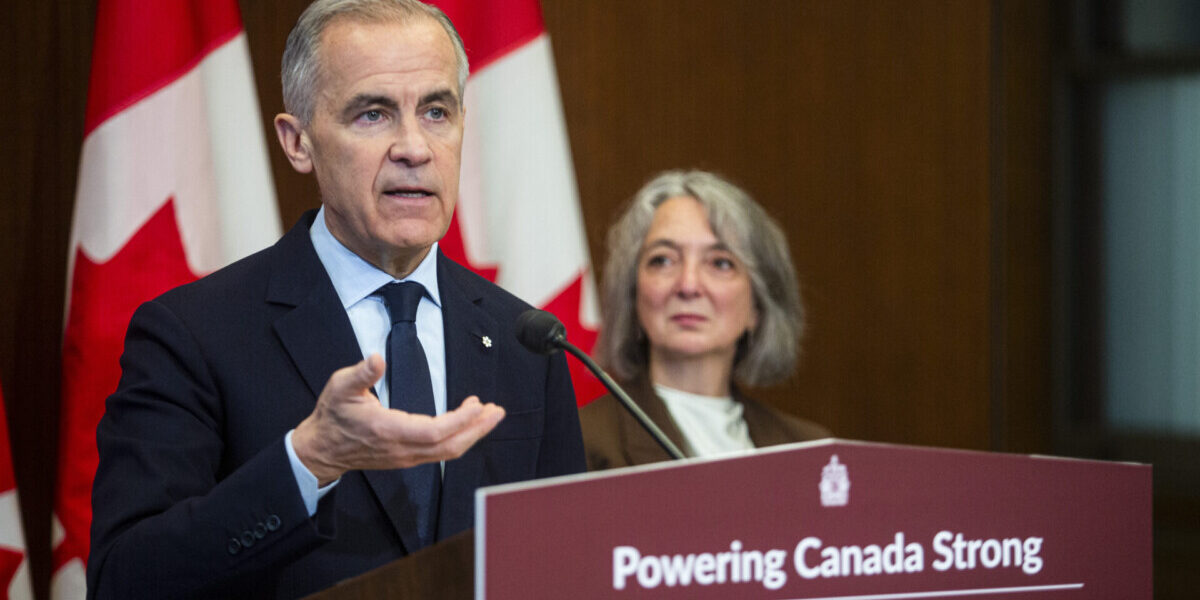
The Carney Liberals intend to eliminate a requirement for U.S. streaming giants to financially contribute to Canadian content, and to provide government funding to replace those contributions, according to a filing before the Federal Court of Appeal.

There’s a need in this sector to improve efficiency and accelerate access to new tools, but if Canadians suspect this is being achieved by reducing oversight or weakening safeguards, trust will decline quickly.

Conservative Health Committee member Dan Mazier and NDP health critic Gord Johns say the review should only be conducted by the AG, with Johns wondering how much a third-party audit will cost Canadians taxpayers.

‘The frustration and anger with the health-care system is significant,’ says pollster Nik Nanos, as nine of 10 Canadians say change is necessary.

Both Bill C-34 and Bill C-36 rely heavily on a regulatory office for enforcement. Officials estimate the Digital Safety and Data Protection Commission could be running 18 to 24 months after the legislation comes into effect, but experts say the proposed regulator brings ‘huge concerns.’

The framing of the government’s artificial intelligence strategy treats AI as something happening to us, a wave we react to rather than a thing we build. It has the opportunity backwards.

While Liberal members tried to squeeze one more study into the schedule, Conservatives held firm that they should continue reviewing the terminated federally-funded e-prescribing program. Conservative health critic Dan Mazier says it’s important because ‘$300-million has gone into nowhere.’

‘Companies should not have the ability to use your behaviour, your location, your profile, your vulnerabilities, or your personal information to charge unfair prices,’ said AI and Digital Innovation Minister Evan Solomon. ‘Your personal information should not be used against you for price gouging.’