Canada-U.S. trade conflict is an old movie with new actors, but it’s now on the precipice of becoming genuinely ugly
SCARBOROUGH, ONT.—Canada has lived beside the United States for all of its existence as a country. We have traded with it, defended ourselves alongside it, argued with it, negotiated with it, and occasionally worried that its extraordinary power could overwhelm our own sovereignty.
Today, that old Canadian dilemma has returned with unusual force.
Canada-U.S. relations are at an all-time low and, more likely than not, are going to get worse before they get better. U.S. President Donald Trump appears to be an endless source of provocation, insult, and derision. Unsurprisingly, Canadians have noticed. The relationship is now on the precipice of becoming genuinely ugly.
When Prime Minister Mark Carney says that negotiations will resume when the American administration changes its attitude, it is reasonable to conclude that negotiations are unlikely to resume anytime soon.
But the challenge itself is hardly new.
From Confederation to the present, Canadian politics has repeatedly returned to the same fundamental question: how does Canada preserve its sovereignty while living beside the world’s most powerful nation?
Sir John A. Macdonald captured the tension in a different era when he said, “A British citizen I was born, a British citizen I will die.” Canada’s first generation of political leaders understood that national identity and national independence had to be defended even as Canada remained deeply connected to larger powers.
Sir Wilfrid Laurier faced much the same dilemma. In 1897, he famously declared, “There will be no more pilgrimages to Washington.” Yet, only a few years later, he negotiated the Reciprocity Agreement of 1911 in an effort to establish closer economic ties with the U.S. The political reaction was immediate. Many Canadians saw reciprocity as a threat to sovereignty, and Laurier was defeated by the Conservatives.
The pattern continued.
In 1940-41, the Ogdensburg Agreement between then-U.S. president Franklin Roosevelt and then-prime minister William Lyon Mackenzie King established the architecture of North American defence. It recognized a fundamental reality: Canada’s security could not be separated entirely from the security of the U.S.
Decades later, the same tension appeared in economic policy.
In the 1988 federal election, then-Progressive Conservative leader Brian Mulroney made the Canada-U.S. Free Trade Agreement a central issue. Liberal leader John Turner delivered one of the most memorable lines in Canadian political history: “I happen to believe that you have sold us out.”
Turner lost. Free trade proceeded. The Canada-U.S. Free Trade Agreement came into force in 1989. The North American Free Trade Agreement followed in 1994, and Canada-U.S.-Mexico Agreement replaced it in 2020.
For Canadians, however, these agreements have never been merely commercial arrangements. They have always carried a larger question: how much integration with the U.S. is compatible with an independent Canada?
That question has become unavoidable again.
The suggestion that Canada could become the 51st American state has produced a visceral reaction across the country. Canadians have responded not simply with anger, but with changes in behaviour. Travel to the U.S. has fallen. Consumer choices have shifted away from many American products. And the experience surrounding the Gordie Howe International Bridge shakedown has reinforced concerns about what happens when Canada becomes dependent upon infrastructure and relationships that can be affected by an increasingly unpredictable American partner.
The answer cannot be isolation. Canada cannot and should not turn its back on the U.S. Geography will not permit it, and neither will economics, defence, energy, or trade.
But neither can this country simply assume that the relationship will always operate according to the rules and assumptions of the past.
That is the central challenge for Carney.
His emerging strategy can be understood through three broad pillars: sovereignty first, partnerships with like-minded nations, and a stronger domestic economy.
Sovereignty means having choices. Partnerships mean ensuring that Canada has more than one set of relationships on which to depend. And a strong economy means possessing the capacity to withstand pressure when those relationships become difficult.
Canada has considerable leverage, if it is prepared to use it intelligently. We remain a critical supplier of aluminum, uranium, potash fertilizer, oil, natural gas, hydroelectric power, and many other resources. Our task is not to turn those advantages into weapons, but to ensure that Canadians understands their strategic value.
The objective should be neither anti-Americanism, nor reflexive accommodation. It should be Canadian resilience.
Get Weekend Point of View Newsletter
A round up of the past week’s opinion writers and columnists on Saturdays and Sundays.
By entering your email address you consent to receive email from The Hill Times containing news, analysis, updates and offers. You may unsubscribe at any time. See our privacy policy
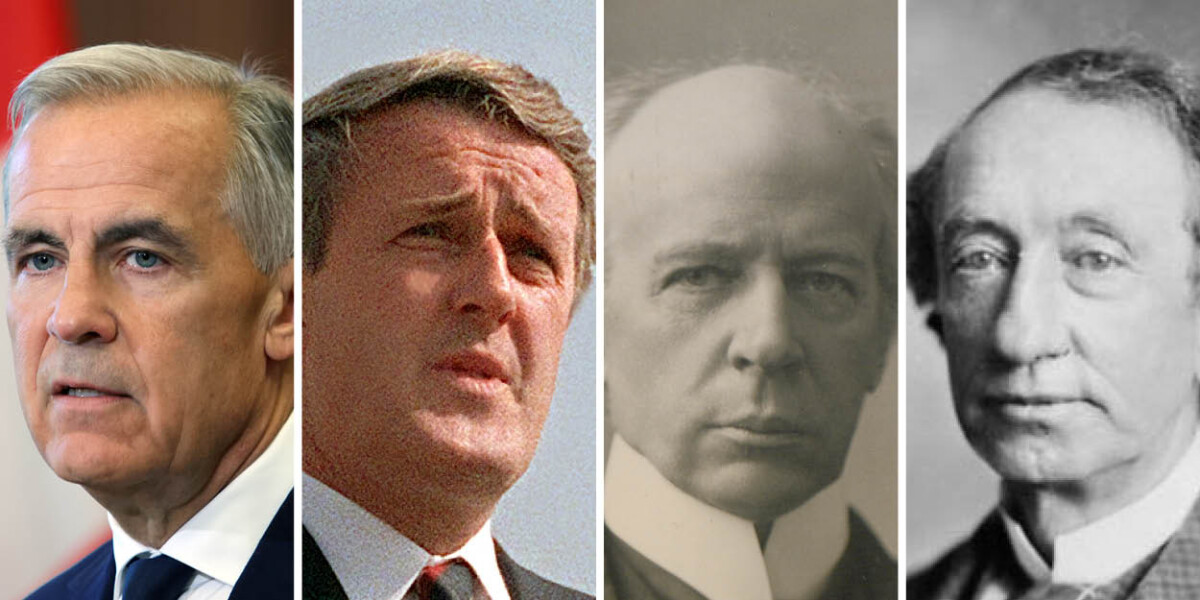
The challenge facing Canada today is, therefore, not new. It is simply the latest chapter in a debate that stretches from Macdonald and Laurier to Mulroney and now Carney.
The circumstances have changed. The underlying question has not.
Former United Kingdom prime minister Lord Palmerston put it succinctly: “We have no eternal allies, and we have no perpetual enemies. Our interests are eternal and perpetual.”
It is a reminder of the first obligation of any government, which is to protect the interests of its own country.
For Canada, that means being a good neighbour to the U.S., even when it is not, but also being sufficiently sovereign, prosperous, and diversified that we can withstand whatever comes next and there will be a next.
John McKay is the former Liberal Member of Parliament for Scarborough–Guildwood, Ont., and was the Canadian co-chair of the Canada-U.S. Inter-Parliamentary Group. He co-chaired the Permanent Joint Board on Defence for seven years. He was an MP for 27 years, from 1997 to 2025, and is now a senior associate at David Pratt & Associates.
The Hill Times