From robocalls to a robust regime, elections commissioner Côté reflects on a decade of decisions

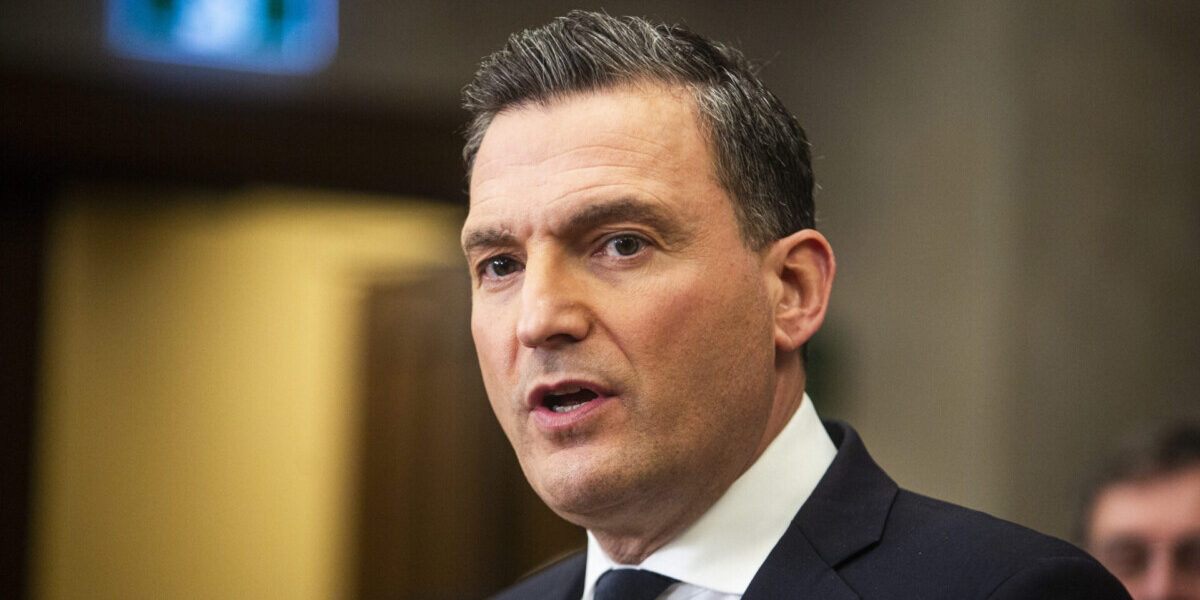
After 10 years as commissioner of Canada elections, Yves Côté is leaving behind a bigger office with more teeth—one he says will have to grapple with the growing and nebulous threats of foreign interference and disinformation in Canadian elections.
“The biggest things that we have now that we didn’t have before would be things linked in particular to two things: one is foreign interference and the other is disinformation, and … 10 years ago when I started, that was not really a big thing,” said Côté in an interview with The Hill Times in his Gatineau office on June 22.
Responding to the threat of foreign interference calls for “many people to react and to act,” from Global Affairs to the Canadian Security Intelligence Service (CSIS), the Communications Security Establishment, media, academics, and “pressure groups,” with the commissioner’s office responsible for only a “small slice of the operation, of the challenge.”
“That’s big, that’s difficult, and you know, as I hand over the position to a new commissioner, Madame [Caroline] Simard, this is something that I’m sure she will be called upon to deal with, and it’s not going to be easy,” said Côté, whose term ends on June 30.
On June 13, Chief Electoral Officer Stéphane Perrault announced that Simard, a lawyer who’s been vice-chairperson of broadcasting at the Canadian Radio-television and Telecommunications Commission since 2017, will take over as Canada’s next elections commissioner on Aug. 15.
“She has the tools, in terms of we have a very good team. … I think she starts with a step or two ahead, but the fundamental issues linked with foreign interference are difficult. Even when you think how you would amend the legislation to make it easier, more efficient to go after these things, it’s very difficult, because obviously you’re dealing with countries that are sovereign and that are not particularly interested—if not totally uninterested—in co-operating with you,” Côté said.
Created in the 1970s, the Office of the Commissioner of Canada Elections is responsible for ensuring compliance and enforcement of the Canada Elections Act and the Referendum Act. The commissioner’s office receives, assesses, and if necessary, investigates complaints or allegations of wrongdoing related to federal elections, byelections, or federal referendums.
A longtime public servant, Côté first took the commissioner’s seat in July 2012, when the office was in the midst of investigating allegations of voter suppression following the 2011 federal election, also known as the robocalls scandal.

Former Conservative staffer Michael Sona, leaving an Ottawa courthouse in 2014. The Hill Times file photograph
The investigation included more than 40,000 communications and complaints related to automated phone calls doling out incorrect polling location information largely to non-Conservative voters in Guelph, Ont., and led to charges being laid against former Conservative staffer Michael Sona, then 24 years old, in April 2013.
Côté said it was “quite an introduction” to the role.
“It was big, it was huge, but I am happy that, at the end of the day, we could launch a prosecution against somebody … in terms of denunciation and in terms of showing that, when abuses take place, sometimes we can address it and deal with it in a way that is very public and very, I hope, reassuring for people who look at that from the outside,” he said. “Now, of course, in terms of threats to the system, I think robocalls was fairly simple, in a way. So now the risks, the danger, is maybe bigger and more difficult to deal with.”
Côté has since overseen some 330 formal investigations.
When he started on the job, the commissioner’s office had about 12 employees and a handful of contractors—today, it stands at roughly 50-staff strong. As an independent office, the commissioner was given the power of a deputy minister when it comes to management of the office’s human resources in 2015, with the latitude—and open budget—to hire staff as needed.
Those 2015 changes, brought about through the Harper government’s Fair Elections Act, also saw the office moved out from under Elections Canada to be housed within the office of the director of public prosecutions (DPP) at the Public Prosecution Service of Canada. It was reintegrated with the office of the chief electoral officer following Liberal amendments in 2017. In the process, the commissioner’s team took charge of its own communications and legal services, and the introduction of the administrative monetary penalties (AMPs) regime in 2019 also spurred the office’s growth, said Côté, noting a couple of extra staff have also been hired to do intelligence-gathering related to investigations in recent years.
“It’s important for people to realize that we have an office that is well resourced, that is totally independent, and that whose sole job is to enforce the legislation,” he said.
The office today also has significantly more “teeth.”
“When I came here, we had a very, very small, tiny toolbox in terms of how we could enforce the act,” he said. Changes introduced by Conservative and Liberal governments since 2012 have expanded that toolbox, including enabling the commissioner to negotiate and add conditions to compliance agreements, directly lay charges for Elections Act offences (as opposed to recommending the DPP lay charges), seek court orders to compel testimony related to investigations, and issue administrative monetary penalties.

Yves Côté ends his 10-year term on June 30. The Hill Times photograph by Andrew Meade
Before the AMPs regime was established, Côté said there were “a number of things that we could not really sanction,” as the office’s only real tool to “impose some sort of penalty” was laying charges for prosecution—and for Canada’s overloaded criminal courts, prosecuting such regulatory infractions aren’t a particularly high priority.
Since 2019, the office has issued about 120 such penalties. Currently, the regime covers non-compliance with the act related to financial administration, communications, and advertising rules, and illegal voting (something Côté stressed is “not a serious problem” in Canada, and includes instances of someone mistakenly voting in the wrong riding or voting after passing their citizenship exam but before officially becoming a citizen). AMPs can range from $50 to $1,500 for individuals and from $300 to $5,000 for corporations or entities.
In the office’s first-ever recommendations report (mandated by 2019 amendments to the act), tabled in the House of Commons on June 7, Côté calls for the AMPs regime to be expanded, including, for example, to cover prohibitions related to registering to vote at advance polls or wearing symbols associated with a candidate or party at a polling station.
While the regime was still getting up and running during the 2019 election, it was in full force for the 2021 race. Asked whether he’s noticed a change in behaviours as a result, Côté said he thinks “the word is getting spread.”
“In the past, you know, you filed a report late, probably nothing happened, but now if you get a fine … then the word goes around: ‘be careful,’” he said. “I think what it says to political parties and candidates [is], you better recruit your people with a higher degree of prudence because, you know, one year, two years from now if they don’t comply with the legislation they might face consequences.”
Among his 22 recommendations, Côté also highlighted a call to require “any person or entity” that uses, or helps or advises someone in using, an “online platform” to publish election-related or partisan advertising to exercise “due diligence” to ensure compliance with the Elections Act’s existing rules on online platform use.
“What we’ve had up to now is some people, some candidates and parties, using social platforms outside the country, sometimes in countries that are far away, and those social platforms may not particularly see it as an important thing to try and comply with the act,” he said. While he declined to give any examples, that could refer to platforms like China’s Weibo.
“We would like Parliament to say to candidates and parties: if you’re to use social platforms, you have to show due diligence in making sure before you deal with them that they adhere and comply with the legislation, and if you do not do that, then we can go after you … going after the social platform in some far-away country is almost impossible, so we’re putting the onus on people here in Canada.”
As well, Côté underlined a recommendation to add new provisions to the act’s financial administration rules to specify that any collusion or co-ordination between third parties and regulated political entities that results in financial benefit to the regulated entity be considered and treated as a contribution.

Chief Electoral Officer Stéphane Perrault’s June 7 report recommended making it illegal to spread misinformation about the voting process. The Hill Times photograph by Andrew Meade
While his office’s own recommendations don’t touch on combatting disinformation or misinformation, Côté said he’s in total agreement with recommendations tabled by Chief Electoral Officer Perrault on June 7, including a call to amend the Elections Act to prohibit persons or entities from disrupting or undermining elections by “knowingly making false statements about the voting process. ”
Get Today’s Headlines Newsletter
Your quick scan of the news you need each weekday to be the smartest person in the room.
By entering your email address you consent to receive email from The Hill Times containing news, analysis, updates and offers. You may unsubscribe at any time. See our privacy policy
“What I find very difficult and very regrettable in many ways is the disinformation and misinformation, in particular when it goes after institutions that are responsible for making the system work,” he said. “When the attacks are partisan, or for partisan purposes, they are based on nothing except insinuation and things that people have made up, so it generates noise, and for those people who feel like they would like to disengage or they’re losing trust in the system, it only adds fuel to their fire, and then they move away. Nobody wins, I think, and especially democracy loses.”
The commissioner’s office published its annual report on June 17, and in it, Côté calls for federal political parties to be brought under privacy laws, writing that 2019 changes requiring parties to create privacy policies were only a “very timid step” in the right direction.”
“It’s high time that Parliament dealt with the issue … we’ve had complaints over the years, and as I mentioned in my report, we were even taken to court because we refused to launch an investigation; and I couldn’t launch an investigation because the rules, as they are now, are so lax, so broad, that there was nothing I could do,” he said, referring to a 2020 application for judicial review filed by the Centre for Digital Rights, which was ultimately dismissed.
Reflecting on his term, Côté said there are two areas where his office “could have done it differently”: outreach—both in terms of making the office better known and in getting more input from academics and politically engaged organizations—and transparency.
“It’s difficult for an investigative body to be transparent, because the privacy of individuals may be at play, investigations may be jeopardized if you talk too much … [on] the other side there is a need for people to be reassured” and made aware, he said, suggesting his successor, Simard, “will have to think about how she can perhaps torque the machine a little bit to be a bit more transparent.”
The Hill Times