
Ottawa Must Fix the Rules to Create Certainty and Help Us Grow
Sponsored Content By Forest Products Association of Canada
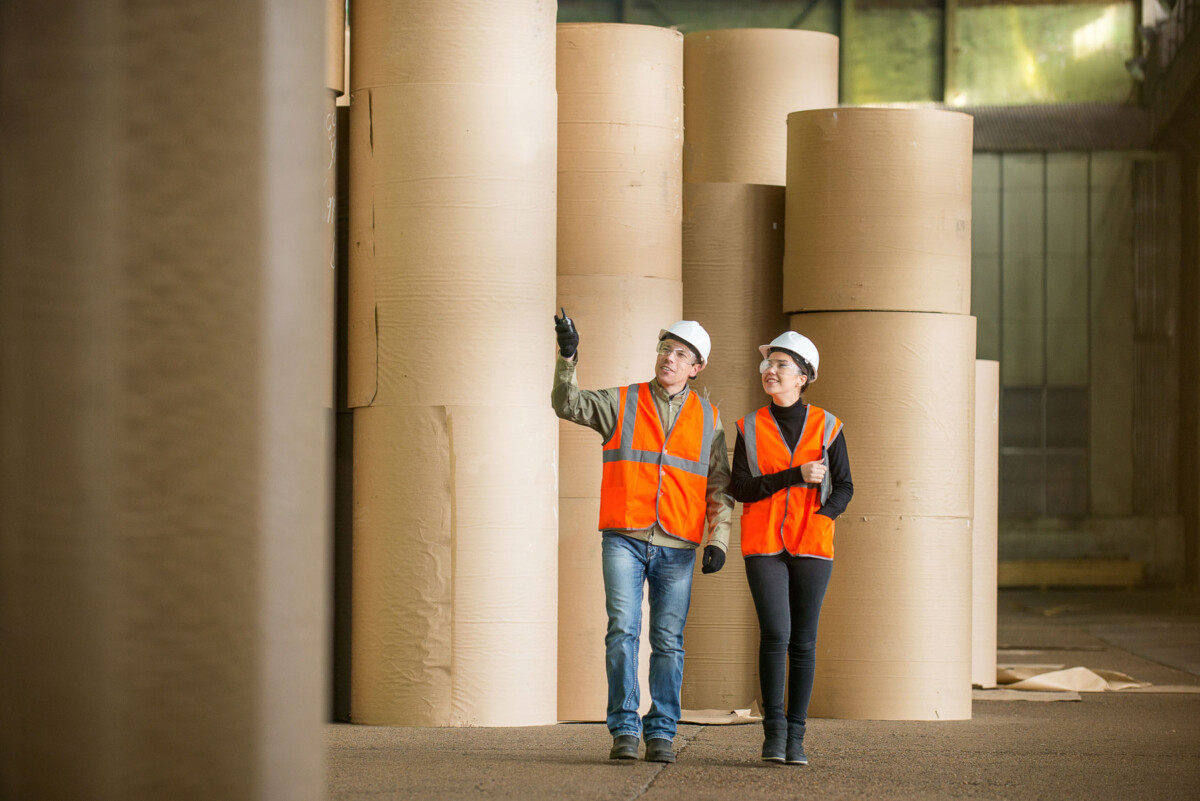
If Canada wants more private investment in forestry, it must start by removing the barriers that make it harder to plan, build, and compete
By Derek Nighbor, President and CEO, Forest Products Association of Canada and Canadian Wood Council
Each autumn in Ottawa brings a familiar ritual.
Parliament returns and organizations from every part of the economy make their case for new programs, tax measures, and federal investment. Those asks are important, and the process is necessary. As we push through the current trade dispute with the United States and the geo-political uncertainty around us, it’s time to look inward with greater urgency. Canada has real operating, infrastructure, and productivity challenges and now is the time to be serious about fixing them.
Not every problem, however, needs a new spending program.
For Canada’s forest products sector, the most immediate opportunities to improve competitiveness don’t come with a price tag. They come from fixing overlapping rules, making decisions faster, better coordinating federal and provincial processes, and creating a clearer path for private investment.
At a time when the federal government is looking carefully at new programs to stabilize and strengthen our economy, regulatory efficiency needs to be a critical part of the budget season conversation. Canada’s forest products sector is a good example of why.
Our companies operate in one of the most regulated industries in the country. Canadians rightfully expect forests to be managed responsibly, environmental standards to be met, Indigenous rights and community interests to be respected, and industry to be held accountable. The problem comes when multiple layers of regulation aimed at similar outcomes operate separately instead of together.
Depending on the province, forestry companies prepare 100-to-200-year forest management plans to ensure forest health for future generations. They navigate multiple federal statutes, dozens of provincial laws, third-party certification systems, and their own operating requirements. Full ecosystem values are considered – and there are many values that compete in the process – and there is a growing need to manage forests considering the growing risk of catastrophic fire. An average mill absorbs roughly $1 million in excess costs each year managing regulatory complexity, which could otherwise be allocated to support strategic investment to modernize, innovate and keep more Canadians working.
The uncertainty can be just as important as the cost. Forestry is a capital-intensive business. When a company is considering a major mill or equipment upgrade or a new product line, it is looking years, and often decades, ahead. It needs to know what rules will apply, how long approvals will take, whether existing permits will continue to be respected, and whether work completed through one government process will have to be repeated through another. In short, will the mill have the certainty of access to the wood supply to keep the mill running and competitive.
If the path is unclear, the investment case gets harder to make. That’s why regulatory efficiency is not simply a question of administrative convenience. It affects where companies invest, which facilities get modernized, and which communities benefit from that investment.

There are practical ways to improve the system while maintaining stringent environmental standards. Federal and provincial governments can make better use of agreements where they are already working toward the same outcome.
Routine, low-risk activities can have clearer and more standardized pathways. Regulators can spend more time on the files that actually present greater risk, rather than requiring every activity to move through the same process. The same logic should apply when an existing mill is being modernized. If a facility is replacing equipment, improving energy efficiency, or installing a new clean technology, the review should focus on what is actually changing and the risks associated with that change. Existing operations should not be reopened from top to bottom unless there is a material reason to do so.
This matters even more in the current economic environment. Canada can’t control every development in Washington or eliminate the uncertainty facing exporters. And, if we want improve prospects for our employees and forest dependent communities, and if we want to have a shot at diversifying and growing other export markets, greater operating certainty and reducing costs in the system are essential. And these can be done in a way that upholds our high environmental values, our commitment to reconciliation, and our top priority which is ensuring every employee returns home safely after the working day.
A recent C.D. Howe Institute analysis of Canada’s trade and productivity challenges makes the stakes clear: “Delayed investment is not neutral; it compounds.” The longer companies put off equipment upgrades and new technology, the further they risk falling behind their competitors. The analysis points to improving Canada’s investment climate — including by reducing red tape and streamlining regulations — as part of the solution. That is exactly where the federal government can make a difference without reaching first for a new spending program.
There is still an important role for targeted public investment and incentives. FPAC has supported measures that help companies retool, improve productivity, and adopt new technologies and welcomes the additional measures recently announced. However, public dollars will have less impact if private investment continues to be held back by regulatory uncertainty, duplicative approvals, or timelines that make projects difficult to commit to and execute.

The same principle applies to transportation. Many forest product facilities are located far from major markets and ports. FPAC estimates Canadian producers pay between $2 billion and $3 billion annually in inland freight costs, which can account for more than a quarter of the delivered cost of a product.
It can cost up to seven times more to move domestic forest products by rail in Canada than it costs to ship them across the ocean. We can’t afford to simply accept this as the cost of doing business in Canada. Improving rail performance, competition, transparency, and trade infrastructure can make Canadian products more competitive without asking government to cover those costs indefinitely.
That is the broader point. We need the federal government to look at Canada’s forest sector through the same lens as is urgently looking at critical minerals development and major project delivery. Better recognition of provincially-approved plans is essential as a shorter, more predictable approval process can help an investment move ahead sooner. Greater certainty can make it easier for a company to choose a Canadian facility over an American or European one for its next major investment. That is exactly the kind of progress Canada should look for at this pivotal moment.
The Forest Sector Transformation Task Force has done the work to provide a government with useful playbook. Its recommendations point to the importance of cost-competitive wood supply, modernization, timely approvals, stronger market access, reliable trade infrastructure, and better coordination. Now it’s time for the federal government to start the practical work of implementation.
As Parliament returns and the next federal budget takes shape, Ottawa must look closely at where they can remove barriers, improve the investment environment, and unlock private capital without requiring a major new fiscal commitment. This isn’t about reducing standards but rather ensuring that Canadian companies are not carrying unnecessary costs and uncertainty created here at home.
Canada’s forest sector is ready to compete, invest, and grow. Ottawa’s job now is clear: remove the made-in-Canada barriers holding back the growth and potential of our businesses and workforce.

 © 2026 Hill Times Publishing