
If Adaptation Is the Priority, Water Infrastructure Must Lead the COP30 Conversation
Sponsored Content By
By Adnan Qader, Manager, Water Governance and Resilience, WaterAid Canada
As COP30 enters its final stretch in Belém, one truth is becoming impossible to ignore: water, our most climate-vulnerable resource, remains present in the conversations filling corridors and negotiating rooms, but is nowhere to be found in the political decisions that matter.
For those of us working in adaptation, this gap is not just puzzling. It is dangerous.
WaterAid is responding to a problem seen around the world, but we understand that in Canada and across high-income countries, water’s invisibility has been decades in the making. It functions and flows through systems of pipes most people will never see. COP30 is exposing the cost of that invisibility, namely the illusion that water security is solved when, for millions, it remains the crisis beneath every crisis.
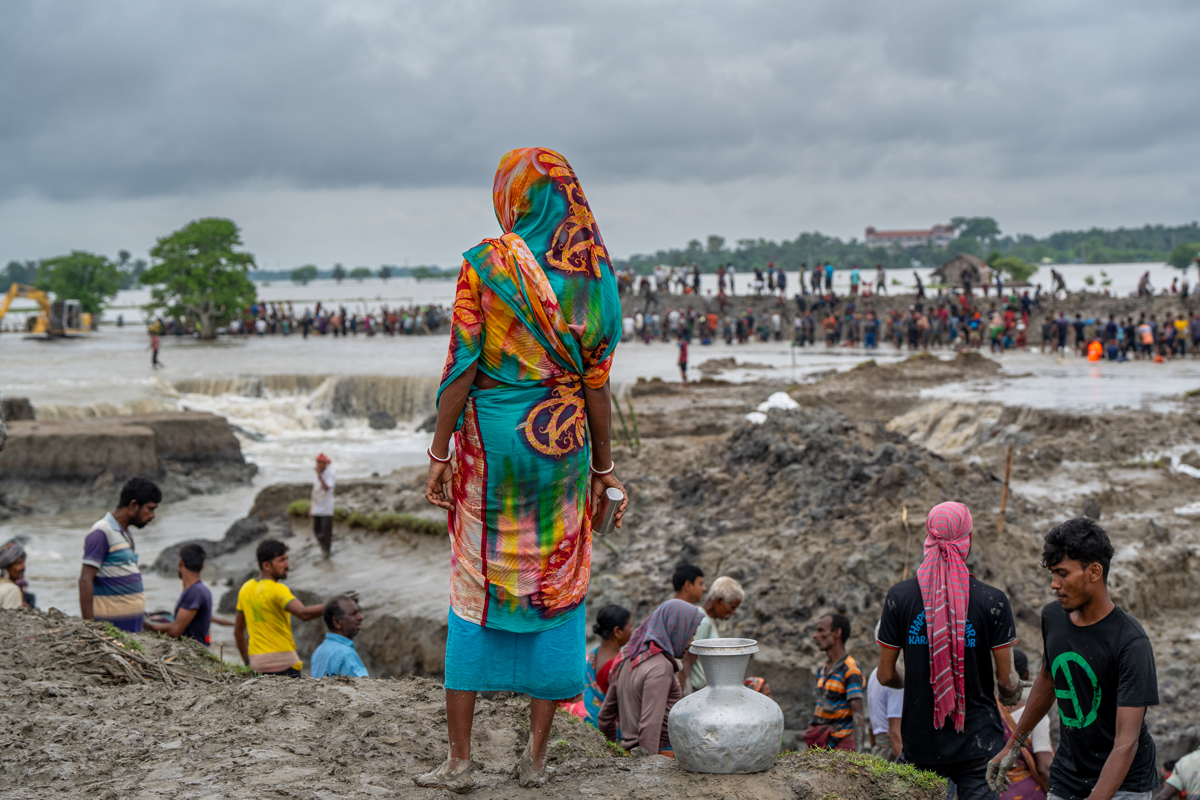
Climate change is dismantling this illusion in real time. Every major climate hazard such as floods, droughts, or hurricanes, disrupts water systems first. And the communities most affected, whether in northern Canada or across the Global South, are those whose systems were historically underfunded, colonially shaped, or governed without their participation. Indigenous delegations in Belém are making this visible, reminding negotiators that water is not infrastructure alone, but governance, identity, and survival.
Ministers Julie Dabrusin and Steven Guilbeault were in attendance, however Canada has yet to signal clear, meaningful, support for the emerging Belém Action Mechanism (BAM), a proposal that would embed workers, communities and Indigenous Peoples in a coordinated global Just Transition framework. With the G77+China backing this direction, and the European Union proposing its own institutional arrangements, Canada’s hesitation is increasingly noticeable.
Water’s invisibility is also playing out in climate finance. Canada’s $392 million adaptation announcement supports important initiatives yet draws entirely on Canada’s existing 2021–2026 climate-finance envelope. The world is watching for Canada’s next pledge and for clarity on how adaptation finance will increase and prioritize local resilience. Canada can either spend strategically now to keep climate risks manageable or pay exponentially more later in disaster response, health emergencies, and economic volatility, international adaptation finance is a cost-avoidance tool for Canada’s future stability. Aligning with this same logic used in trade policy, defense spending, and global health initiatives only makes sense.
Civil society is equally clear: a fossil-fuel phase-out will fail without public, grant-based finance for communities already absorbing climate losses and damages. Without that, we ask frontline communities to adapt without the tools needed to survive, including water and sanitation.
Canada has made valuable contributions, adopting the G7 Water Coalition 3-year workplan, defending scientific integrity at the IPCC, and signing the Declaration on Information Integrity on Climate Change.
John H. Matthews, Executive Director of Alliance for Global Water Adaptation (AGWA) who attended the Baku Water Dialogues and has been attending COPs since 2009 admits that “water in climate negotiations has always felt like it was sitting underground, untapped.” This year, he witnessed the echoing of water in those corridors, a welcomed signal of progress:
“As adaptation and resilience have grown in importance in the COP, so has the need for seeing and managing water as the medium for resilience. The purpose of the Baku Water Dialogues is to maintain a consistent flow of negotiations around water between COPs, where water is in effect surfacing from its hidden aquifer. Canada in particular has been a vocal advocate of these issues in sessions.
All of the countries in attendance strongly supported the need for a Baku Water Dialogues, though specifics on what the process will look like remain uncertain. Nonetheless, the seepage of water into COP30 should become a fountain, and I have high hopes for what comes next. We are all thirsty.”
But these efforts coexist with signals that risk weakening public trust, including proposed dilution of anti-greenwashing rules.
It is in this context that water and sanitation infrastructure and services must be recognized as central to building resilience, not side events.
Sanitation rarely enters climate headlines, yet it is the fault line where climate impacts rapidly become public-health crises. Today, November 19th, on World Toilet Day, we’re reminded that billions of people still lack safe access to sanitation, making it one of the most persistent and politically neglected development challenges. When floods contaminate drinking water, when storms overwhelm wastewater systems, or when prolonged rains or heat waves accelerate disease transmission, sanitation failures become health emergencies.
If Canada wants its climate-finance pledge to be strategic and measurable, climate-resilient water and sanitation systems are among the most effective investments it can make. These are investments to protect health, stabilize communities during shocks, safeguard drinking water, and strengthen economic participation, all while reducing the long-term costs of emergency response and building resilience for people and planet.
More importantly, such investments challenge climate decisionmakers to confront what has long been missing: Indigenous water governance grounded in the lived realities of communities whose water stewardship traditions offer models for resilience that modern systems are only beginning to rediscover.
As COP30 labours towards its conclusion, it is clear climate action must start where climate impacts are felt most, in our water and sanitation systems. Adaptation that does not strengthen water and sanitation systems is adaptation in name only. To move from political speech to practical resilience, water must return to the center of the conversation, in Belém, in Ottawa, and around the world.

 © 2026 Hill Times Publishing